
Free in-home measure and quote - PGT, CGI and CWS impact lines compared on your actual openings, style by style
Sliding glass doors
Impact garage doorsPGTCGI
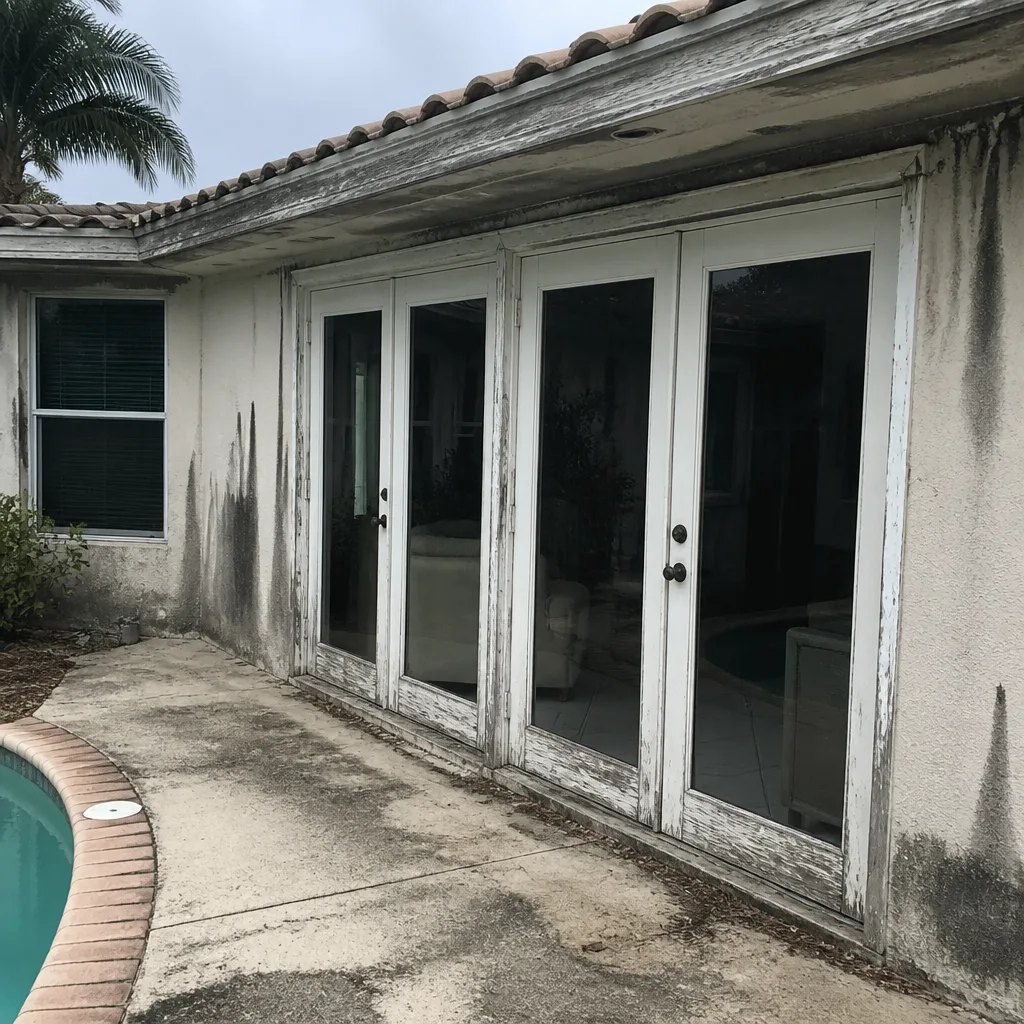 Before
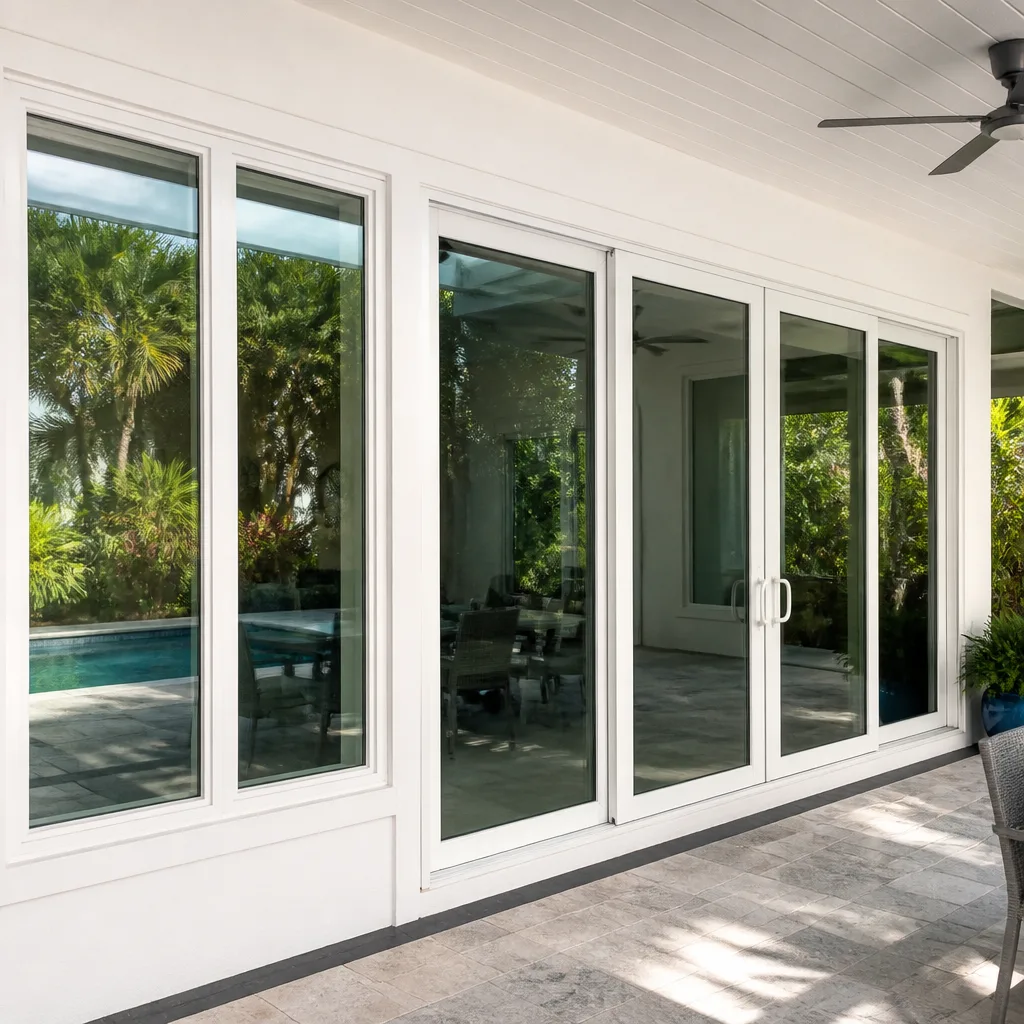 After
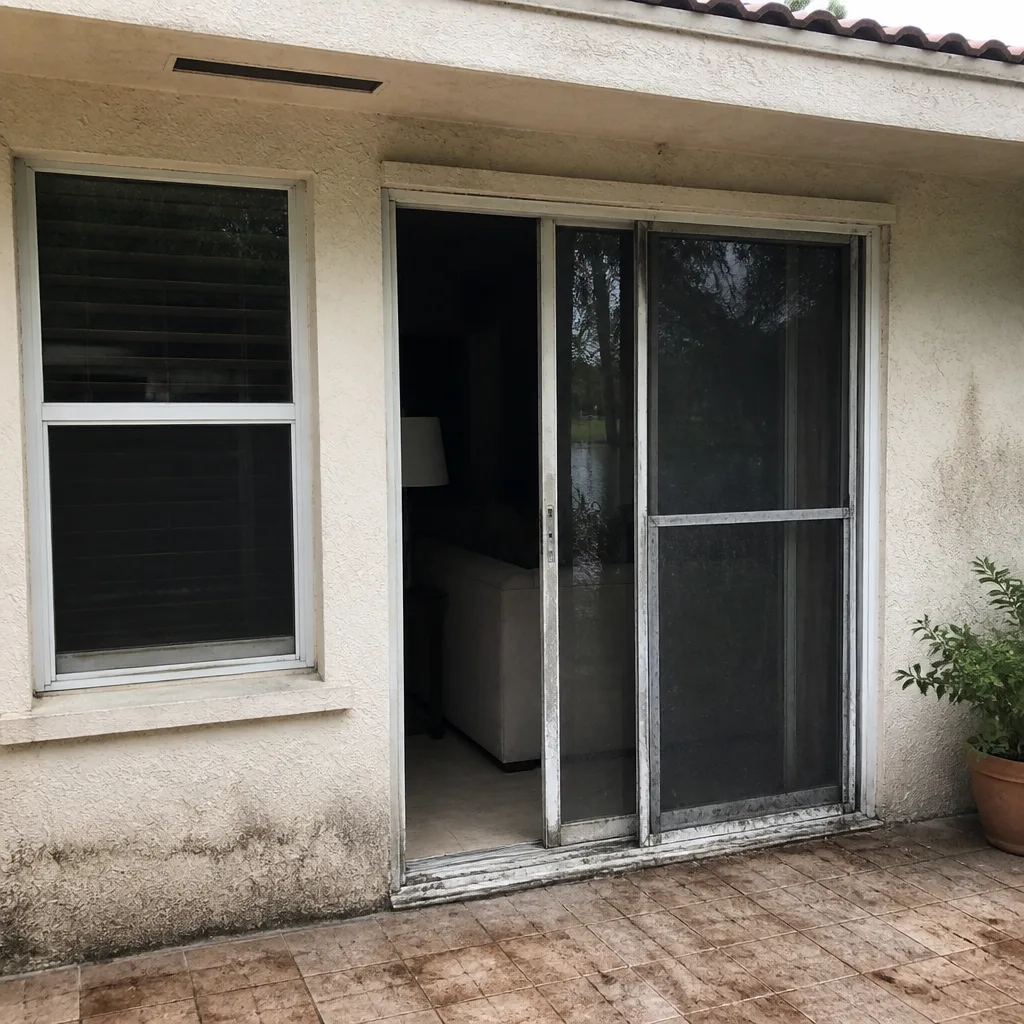 Before
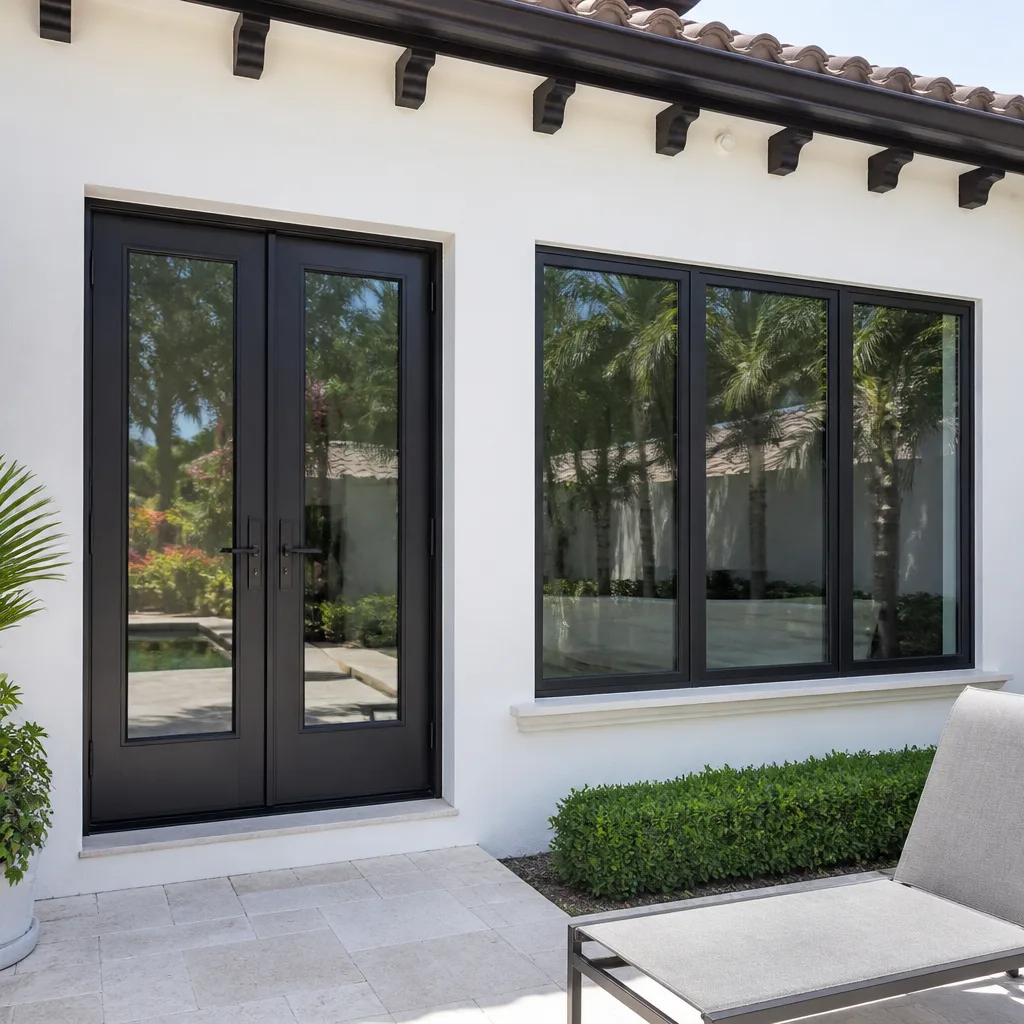 After
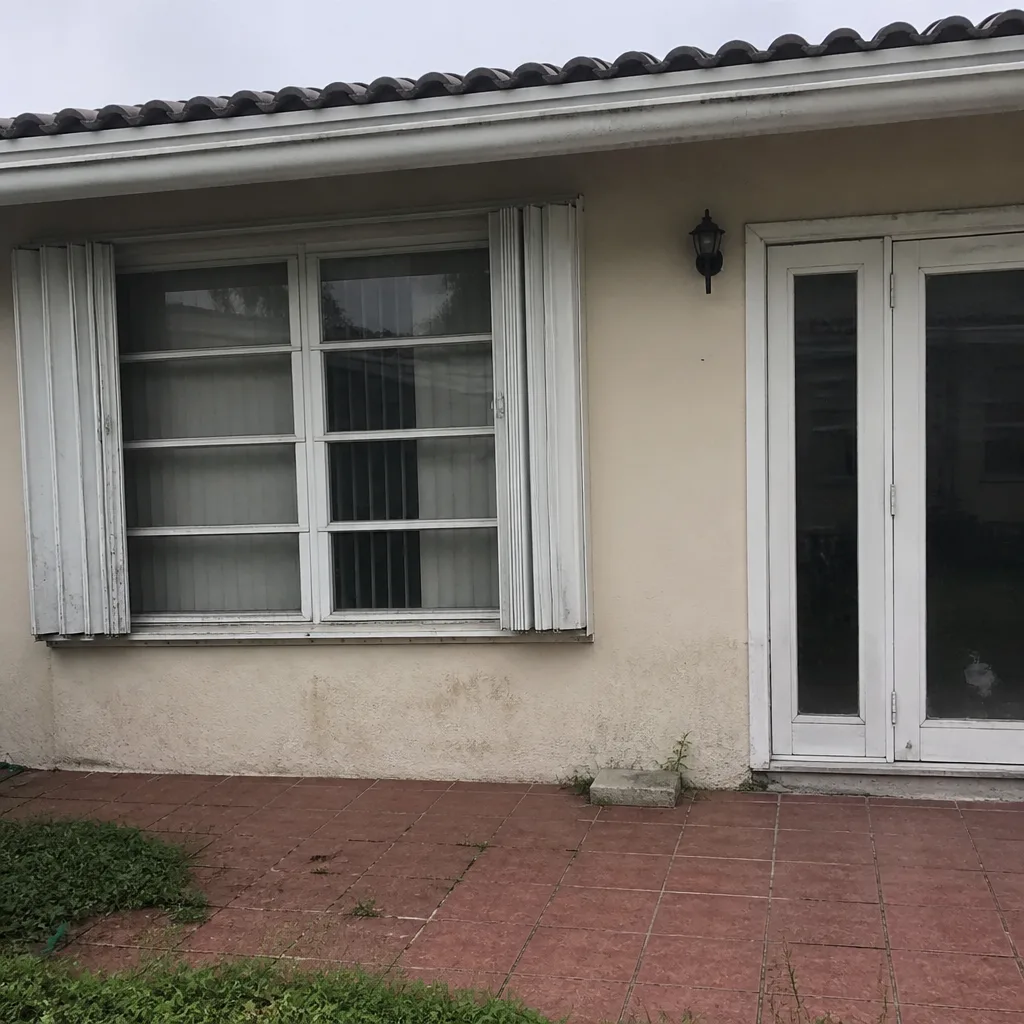 Before
 After
Low-E Glass in Delray Beach: What It Actually Does in a Salt-Air, Hurricane-Zone Climate
Low-E glass is window glass treated with a microscopically thin metallic oxide coating that reflects infrared heat while letting visible light through. In Delray Beach, that coating is doing two jobs at once: cutting solar heat gain off the Atlantic and slowing the salt-humidity breakdown that fogs ordinary insulated units. Call (561) 940-2917 if you’d rather talk it through than read about it, but here’s the whole picture.
What the Coating Is, in Plain Terms
Low-E stands for low emissivity. Emissivity is a material’s tendency to radiate heat back out. A standard pane of clear glass lets roughly 85 percent of the sun’s infrared energy pass straight into your living room. A low-E coating flips that: it bounces the infrared back outside while the visible light still comes through. You get daylight without the heat load behind it.
The coating itself is applied in one of two ways. Hard-coat low-E is baked onto the glass while it’s still molten, which makes it durable enough to sit on the outside surface of a single pane. Soft-coat low-E is applied after the glass is formed and then sealed inside the airspace of an insulated glass unit (IGU). Soft-coat is the better performer, but it has to live inside the IGU, which means the seal around that unit is now the weak point. In Delray Beach, that distinction matters more than most people realize.
We can walk you through both types regularly. Which one belongs in your house depends on the exposure, the frame material, and whether the opening needs impact-rated glass.
Why Delray Beach Is Different From Just About Everywhere Else
Most of the country debates low-E in terms of heating versus cooling seasons. Here, the debate is simpler: the sun and the salt are your two enemies, and low-E helps with the first one more than people expect.
East Delray Beach sits inside Palm Beach County’s High-Velocity Hurricane Zone. Any permitted window replacement is effectively bound by windborne-debris requirements, which means impact-rated glass is the baseline. Impact glass and low-E are not the same thing, but they often meet in the same unit. PGT and CGI, both Florida manufacturers we’re authorized to install, build impact-rated IGUs with low-E coatings as standard on most product lines. You’re not choosing between hurricane protection and heat rejection; you’re choosing which coating package and tint level goes into the impact unit.
Then there’s the salt. Properties east of the Intracoastal Waterway deal with airborne salt that oxidizes aluminum frames and eats at stainless hardware faster than anywhere inland. A low-E IGU doesn’t fail because the coating wears out. It fails because the edge seal around the unit breaks down under years of salt-humidity cycling, and then moisture gets between the panes and the whole unit fogs. That’s the phone call we get every November and December, when the snowbird owners along the A1A corridor come back and find their sealed-up units have fogged through the summer. The glass could’ve been the finest low-E on the market and it wouldn’t have mattered; the seal failed.
Low-E, Solar Heat Gain, and What You Should Actually Care About
Every low-E product line has a solar heat gain coefficient (SHGC) rating. The number runs from 0 to 1, and lower means less solar heat gets through. In a cooling-dominated climate like ours, we usually recommend SHGC ratings between 0.25 and 0.30 for east- and west-facing glass. That range cuts meaningful heat without giving up too much visible light, which matters in the 1940s and 1950s CBS homes common in east Delray Beach where windows were never oversized to begin with.
Here’s where people get tripped up. A low-E coating also affects the U-factor, which measures how well the glass resists heat flow in either direction. In a South Florida summer, the temperature difference between inside and outside is maybe 15 to 20 degrees. Up north it’s 60 or 70. That means the U-factor improvements from low-E matter less here than the SHGC improvements. If a salesperson leads with U-factor numbers in Delray Beach, they’re either reading a national script or they don’t know the local climate. We quote SHGC and visible light transmittance side by side on paper so you can see exactly what you’re buying, from Energy-Efficient Windows through to the impact-rated product lines.
What to expect on a typical low-E package in this market
- Clear low-E, hard-coat, single-pane: Rarely installed new in Delray Beach except in protected interior or non-permitted applications. $18 to $30 per square foot, installed.
- Soft-coat low-E IGU, non-impact: The workhorse for west-of-95 homes not in the windborne debris zone. $35 to $55 per square foot, installed.
- Impact-rated low-E IGU (PGT, CGI, ES Windows): The baseline for east Delray Beach permitted work. $55 to $85 per square foot, installed, depending on frame and size.
- Marine-grade frame upgrade: For properties east of the Intracoastal, we strongly recommend anodized or marine-finish frames. Adds roughly 10 to 15 percent to the frame cost and doubles or triples the realistic service life.
These are honest ranges for this market, not national averages. We price on the actual rough opening, and we measure twice before we quote anything. If a number seems too clean, ask to see it broken out by line item. We do that on every home visit, no exception.
Before he recommends a low-E package, he reads the opening the way most people read a room. Three things decide the call.
First, which direction the glass faces. East and west elevations take the low-angle morning and afternoon sun, and that’s where low-E earns its keep. North-facing glass doesn’t get direct sun, and south-facing glass in Florida is often shaded by overhangs. Spending extra on a high-performance coating for a shaded north window is throwing money at a problem that doesn’t exist.
Second, what kind of framing the house has. The original 1940s to 1960s CBS construction in east Delray Beach has window openings set in masonry with concrete lintels. When you retrofit a modern impact unit into one of those openings, the lintel condition decides the scope. We’ve seen lintels that were fine for single-pane jalousies but can’t carry the weight of a laminated impact IGU without reinforcement. That’s not a low-E decision; that’s a safety and code decision.
Third, whether the house falls inside one of Delray Beach’s historic districts. Del-Ida Park, Nassau Park, and the Marina District all have Historic Preservation Board oversight on window replacements. The board signs off on style, profile, and material compatibility. You need an impact-rated unit that replicates the original architectural character, and the low-E coating still has to be there because the county’s windborne debris mandate doesn’t bend for aesthetics. We’ve walked homeowners through that dual approval process more times than we can count, and we quote manufacturer lines side by side so the board sees exactly what’s proposed. If it is not in writing, it is not a guarantee, it is a conversation.
Fogged Seals, Failing Coatings, and When to Stop Reading
A low-E unit that’s failed usually shows up one of two ways. The most obvious is fog between the panes, which means the edge seal has let moisture in and the IGU is done. No repair brings that back. The second is a hazy or slightly oily film on the glass surface that won’t clean off. That’s the coating itself oxidizing, and it happens most often on hard-coat low-E that was installed facing into a humid, salt-skied exposure without proper frame drainage.
Neither one is a do-it-yourself fix. We say that plainly because attempting to disassemble an IGU to “clean” the coating is dangerous and pointless. The glass is sealed for a reason, and the unit is under pressure. The right move is a replacement IGU with the correct coating package for your exposure, and a frame inspection while the old unit is out.
Our techs are background-checked and uniformed, and they work in your house the way they’d work in their own mother’s. Most low-E replacement jobs are done in a single visit. We register both warranty layers in writing before the technician leaves the driveway, and the Done Right Promise covers the workmanship, no arguing. If the pane isn’t true, the job isn’t done.
Key Takeaways
- Low-E glass reflects infrared heat while letting visible light through. In Delray Beach, SHGC matters more than U-factor.
- East of the Intracoastal, salt air kills window seals faster than the coating ever wears out. Marine-grade frames and honest seal inspections matter.
- Impact-rated low-E units are the practical baseline for permitted work in Palm Beach County’s High-Velocity Hurricane Zone.
- Historic district homes in Del-Ida Park, Nassau Park, and the Marina District need HPB approval and windborne-debris compliance at the same time.
- A fogged low-E unit cannot be repaired. It’s a replacement, and it’s worth doing before hurricane season tightens everyone’s schedule.
FAQs
Low-E glass is window glass with a transparent metallic coating that reflects infrared heat; regular glass lets most of that heat pass straight through. The visible light entering the room is nearly identical, but the heat load behind it drops significantly with low-E.
Low-E glass in Delray Beach typically runs $35 to $55 per square foot installed for non-impact units, and $55 to $85 per square foot installed for impact-rated low-E IGUs from lines like PGT or CGI. East-of-the-Intracoastal homes should budget extra for marine-grade frames due to the salt air. Call (561) 940-2917 for a free estimate on your specific openings.
Low-E glass reflects radiant heat, so it blocks solar heat gain in summer and also slows interior heat loss in the brief winter cool spells we get in South Florida. The summer benefit is far more relevant in Delray Beach, which is why we prioritize SHGC ratings between 0.25 and 0.30 on east- and west-facing glass.
You cannot apply a true low-E coating to glass that’s already installed; aftermarket window films can reduce some glare and heat but are not the same as a factory-applied low-E coating sealed inside an IGU. When existing windows are tired or fogged, the real fix is a proper replacement unit spec’d for your exposure. We’ll quote it honestly, with both warranty layers registered in writing.
If you’d rather have someone look at your specific glass, TruePane Windows & Doors offers a no-pressure assessment anywhere in Delray Beach. Call (561) 940-2917 and a live person will answer, day or night. We’ll tell you what you have, what’s worth doing, and what isn’t. No fine print, no surprises.
Written by TruePane Windows & Doors, TruePane Windows & Doors at TruePane Windows & Doors, serving Delray Beach, FL.
Six Reasons Homeowners Choose TruePane Windows & Doors
Impact systems engineered to design pressures up to +/-100, matched to your wind zone - your openings hold when the storm arrives.
Low-E insulated impact glass from our manufacturer lines commonly cuts monthly cooling bills 20-30%.
Laminated impact glass shuts out up to 40% of outside noise - traffic, neighbors, weather.
Monitoring services run $30-90 a month. Laminated impact glass resists forced entry around the clock, with no subscription.
Florida homeowners average around 25% savings on the windstorm portion of their policy after protecting every opening - some homes qualify for more.
A full impact package upgrades curb appeal, buyer confidence and appraised value in one project.